Tipping Etiquette Around the World: Who to Tip, How Much, and Where Not To
Nothing about tipping is universal: the gratuity that’s mandatory in Manhattan is baffling in Melbourne and can be politely refused in Tokyo. Getting it wrong rarely causes a scene, but knowing the local norm spares you both overpaying and underpaying the person who served you. Here’s the working map. For the arithmetic once you know your percentage — including splitting the bill — the tip calculator does it instantly.
Open the Tip Calculator →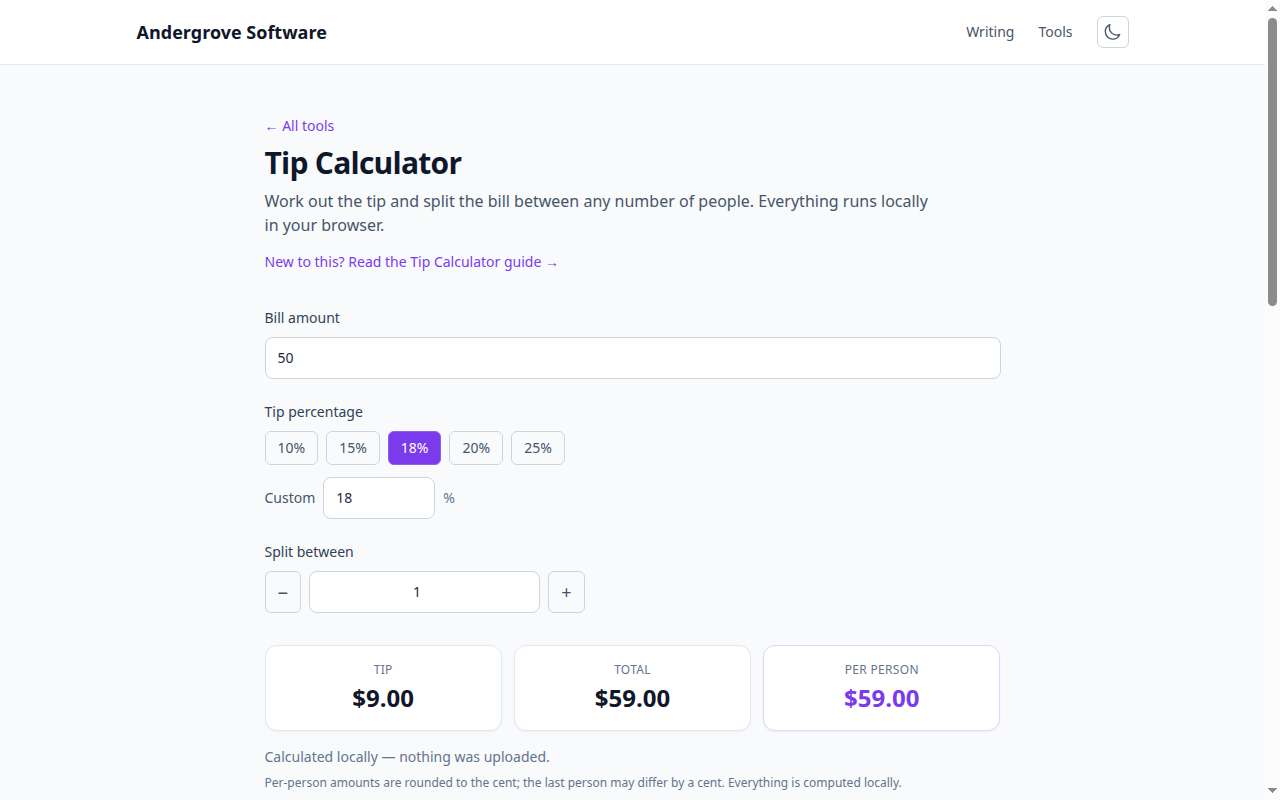
The United States and Canada: tipping is the wage
In the US, tips aren’t a bonus — for many servers they are most of the paycheck, since federal law lets restaurants pay tipped staff a base wage of a few dollars an hour. The working norms: 18–20% at sit-down restaurants (15% reads as mild disappointment), a dollar or two per drink at bars, 10–15% for delivery, and tipping is traditionally figured on the pre-tax subtotal, though on a typical bill the difference is small. Canada runs on nearly identical percentages. Counter-service screens that suggest 20% for handing you a muffin are a newer phenomenon — a small tip for real service is kind, but no one owes a full-service percentage for counter pickup.
Europe: service is (usually) already in the bill
Most of Europe pays service staff a full wage, and many countries print a service charge right on the bill — so tipping is a modest round-up, not a percentage ritual. In France, service compris means exactly what it says; leaving small change for good service is a courtesy. Germany and Austria round up or add 5–10%, told to the server as a total when paying rather than left on the table. The UK sits mid-Atlantic: 10–12.5% at table-service restaurants when no service charge is listed, nothing at the pub bar. Southern and eastern Europe vary, but "round up, add ~10% for standout service" rarely offends anywhere on the continent.
Where tipping isn’t done — and can even misfire
In Japan, excellent service is the baseline professional standard, not a transaction — tips are commonly declined, and pressing money on staff can cause genuine awkwardness. South Korea and China are broadly similar outside tourist-heavy venues. Australia and New Zealand pay full wages and tipping is appreciated but never expected. In parts of Southeast Asia and the Middle East, rounding up or leaving small change is welcome without being obligatory. The travel rule that never fails: when unsure, watch the locals or simply ask — copying local behavior is politer than importing your home country’s rules in either direction.
Splitting, service charges and screen pressure
Three practical snags account for most tipping friction. Service charge vs. tip: if the bill already lists a service or gratuity charge (common for large groups), the tip is handled — adding 20% on top is a donation, not a norm; check before you double-pay. Splitting: compute the tip on the whole bill first, then divide — per-person tipping on uneven orders reliably shorts the server, and the calculator’s split mode handles the uneven-total rounding for you. Screen defaults: preset buttons anchor high and sometimes compute on the post-tax total; the percentage you think is right, applied to the subtotal, is always a defensible answer. If you want the percentage math itself demystified, the percentage mistakes guide is the companion read.
Ready to try it? Open the Tip Calculator →